Australia backpacker transport guide: buses, trains, car hire and flights
A practical comparison of long-distance coaches, rail, domestic flights, car hire and campervans for backpacking Australia. Work out which mode suits each leg of your route, what to watch out for, and which details to confirm with the operator before you book.
Australia is a very large country with a small number of very spread-out cities, and getting between them is usually the biggest single line in a backpacker budget. The gap between two towns that look close together on a map can still be a full day of travel. That makes transport a planning decision rather than an afterthought: the mode you choose shapes how long you stay in each place, how much you carry, how flexible your dates are, and how much of the country you actually see rather than fly over.
This guide compares the five options most backpackers weigh up: long-distance coaches, passenger rail, domestic flights, hired cars and campervans. It deliberately avoids quoting fares, timetables, pass inclusions or hire conditions, because those change constantly and vary by operator, season and location. Instead it focuses on what each mode is genuinely good at, where it tends to disappoint, and exactly which details you should confirm with the current operator before you commit money to a route.
How to decide which transport mode fits a leg
Choose per leg, not per trip. Very few itineraries are best served by a single mode from start to finish. A dense stretch of coastal towns rewards a coach or a shared car because you want to stop constantly. A crossing between distant capitals often rewards a flight because the alternative is days of seat time. A national park loop rewards a vehicle because public transport rarely goes where the trailheads are. Treating each leg as its own decision usually costs less and wastes less time than committing to one mode out of habit.
Four factors do most of the work: distance, group size, luggage and flexibility. Distance decides whether ground travel is realistic at all. Group size changes the maths, because vehicle costs split between people while seat-based fares do not. Luggage matters more than travellers expect once you are moving every few days. Flexibility matters because cheaper options are usually the least changeable ones. Season sits underneath all four, so it is worth checking when to visit Australia as a backpacker before locking in a direction of travel, since weather and school holiday periods affect availability and demand.
Australia transport modes compared
The table below compares the main options on what they are best at and where travellers most often get caught out. Costs are shown as a comparison approach rather than as figures, because fares, hire rates, fees and any pass inclusions move constantly and differ by operator, route and time of year. Use the table to shortlist a mode, then price the actual leg on the operator's own current booking page before deciding.
Read the table as a shortlist tool rather than a ranking. Most successful backpacker routes mix at least two modes: a flight to cover one enormous gap, coaches or a shared car for the section where you want to stop often, and local public transport at each end. The mistake is committing to one mode for the whole trip and then paying for it on every leg where it does not suit the distance.
Long-distance coaches
Coaches are the default backbone of budget travel in Australia, particularly along the eastern seaboard where towns sit close enough together to make short hops practical. They stop in places flights do not serve, they do not require a licence or a deposit, and they let you travel alone without the coordination that a shared car needs. If your route is the classic run between Sydney, Brisbane and Cairns, the East Coast backpacker guide is a useful companion for working out which towns are worth a stop.
The honest trade-off is time and comfort. Long sectors mean long stretches in a seat, and overnight coaches that appear to save you a night of accommodation often cost you a functional day afterwards. Some operators sell multi-trip passes or flexible ticket products, but inclusions, validity periods and change rules differ and are revised regularly, so treat any pass as something to price against individual tickets for your specific route rather than as an automatic saving. Confirm current terms with the operator before buying.
Trains and long-distance rail
Australian rail works differently from the European network many backpackers picture. It is not a dense grid you can use to improvise a route. Outside the commuter systems in each capital, the network is a limited set of regional lines plus a small number of long-distance services, several of which are marketed as tourism experiences rather than as ordinary transport. Departures on those long routes can be infrequent, which makes rail something you build an itinerary around rather than slot in casually.
Where rail does shine is comfort and the experience itself. You can walk around, sleep more easily than in a coach seat, watch genuinely remote country go past, and arrive at a central station instead of an outer-suburb airport. Fares span a wide range depending on whether a service is a regional connection or a premium tourism train, and seating and sleeper classes differ substantially. Check current routes, seasonal operating patterns and class options directly with the rail operator.
Domestic flights
Flying is what makes an Australia-wide itinerary possible in a limited timeframe. Crossings such as an east coast city to Perth, or the mainland to Tasmania, are the clearest cases: ground travel across those distances consumes days you probably want to spend somewhere. Busy city pairs are served frequently, which gives you real choice of departure times, and booking ahead generally gives you more options than booking at the last minute.
The catch is that the headline fare is rarely the full cost. Cheaper fare types commonly carry tighter baggage allowances and stricter change rules, and adding checked luggage afterwards can erase the saving. Airport transfers at both ends add time and money, and airports serving regional destinations may have limited transport options at odd hours. Baggage allowances, fare conditions and carry-on rules vary by airline and by fare class and change over time, so read the specific conditions attached to the fare you are actually buying.
Car hire
A hired car turns a fixed route into an open one. It is the only realistic way to reach many beaches, lookouts, small towns and national park trailheads, because scheduled services simply do not go there. Split between three or four people, a few days of hire can compare well with the equivalent seat fares, and you carry your gear without repacking at every transfer. If your plans involve getting off the main corridor, the camping and hiking trip ideas guide shows the kind of routes where a vehicle changes what is possible.
Hire conditions are where backpackers get caught out, and they are set by each company rather than by any national standard. Minimum driver age, young-driver surcharges, accepted licence types and any translation requirements, insurance excess amounts, additional-driver fees, one-way drop-off charges, and restrictions on unsealed roads and remote areas all vary between companies and even between branches. Do not assume a rule you read on a forum applies to your booking. Read the terms for the exact vehicle, dates and locations you are booking, and ask the company directly if anything is unclear.
Budget for the whole cost, not the daily rate. Fuel over long distances is a real expense, tolls apply around several major cities, and most companies place a security hold on a card at pick-up, which temporarily reduces the funds you can access. Card requirements differ by company, and some will not accept certain card types for the hold. Having your banking sorted early helps here, so opening an Australian bank account is worth doing before a road trip rather than during one. Also plan for driving fatigue, wildlife on rural roads at dawn and dusk, and stretches with long gaps between fuel stops.
Campervans and motorhomes
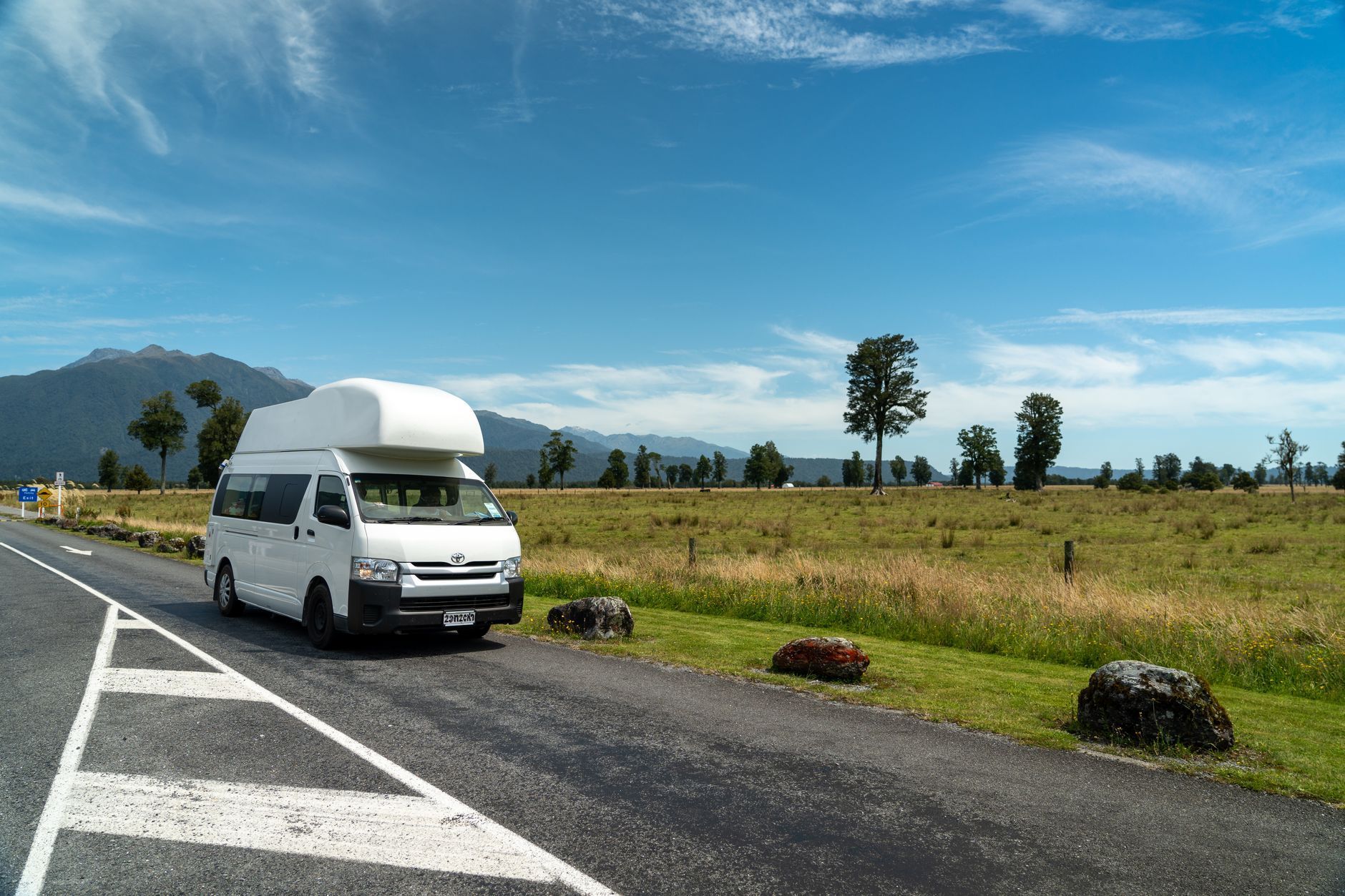
A campervan merges transport and accommodation, which changes the maths completely. Instead of comparing a hire rate against coach fares, you are comparing it against fares plus a bed every night, and you gain a kitchen that cuts food costs as well. For long road trips at a slow pace, particularly with two or more people sharing, vans are one of the more sustainable ways to travel for months.
The complications are fuel, parking and paperwork. Larger vehicles use noticeably more fuel over long distances. Where you may legally park overnight is decided by individual councils and land managers, not by a single national rule, and penalties apply in areas where it is not permitted, so check local rules for each place you stop. Hire companies set their own conditions on one-way journeys, relocation deals, unsealed-road access and self-contained certification. Confirm all of it with the current operator before you plan a route around it.
Getting around cities
Each state and territory runs its own public transport network and its own ticketing system, which is the single most useful thing to understand before you arrive. There is no national travel card. A card or payment method that works in one capital generally will not work in another, and fare structures, concession eligibility, daily caps and airport-line charges are set separately by each authority. Sort out ticketing on arrival in each new city rather than assuming your last setup carries over.
In practice the capitals are well covered by a mix of trains, buses, trams and ferries, and most areas backpackers stay in are within reach without a car. Contactless payment is accepted on some networks, but coverage and rules differ, so check the relevant state transport authority's current advice rather than relying on what worked elsewhere. Regional towns are a different matter: services can be limited or non-existent, which is exactly where a hired vehicle, a tour or a lift from someone else becomes necessary.
Booking tips that actually save money
Book the fixed points early and leave the rest loose. Long flights, limited-frequency rail services and vehicle hire in peak periods are the bookings where waiting costs you the most, because availability, not just price, is the constraint. Short coach hops and city transport can usually wait. If you are travelling on a working holiday visa, your overall timeframe shapes how much you can leave open, so check the working holiday visa guide before planning a route that depends on staying for a set period.
Compare total cost per leg rather than headline prices. A cheap fare with paid baggage and two airport transfers can beat a coach on time but not on money, and a vehicle that looks expensive for one person becomes reasonable across four. Keep a rough buffer for the legs you have not booked, because changing plans mid-trip is normal. If your route is built around finding work in Australia, avoid locking in non-refundable travel before your dates are confirmed. The checklist below covers the details worth verifying before you pay for anything.
Common transport questions
What is the cheapest way to travel around Australia? It depends on the leg and on how many people are travelling. Coaches are often cheapest for one person on shorter hops between towns, while a shared vehicle can win once costs split three or four ways. Flights sometimes beat both on very long crossings when you count the accommodation and food a multi-day ground journey would need. Price the specific leg rather than assuming one mode is always cheapest.
Are bus passes worth it for backpackers? Only if the pass matches the route you were going to travel anyway. Inclusions, validity periods and conditions change and differ between operators, so add up individual tickets for your planned stops and compare that total against the current pass price. A pass that pushes you into extra travel you did not want is not a saving.
Can I hire a car in Australia on a foreign licence? Requirements around accepted licences, translations and international permits vary by company and by state, and hire companies apply their own conditions on top of the legal rules. Check both the relevant state road authority's current requirements and the specific hire company's terms before booking, and carry whatever documentation they specify.
Is train travel practical for getting around Australia? For most backpacker routes, rail is a highlight rather than a backbone. The network is limited outside city commuter systems, and long-distance services can run only a few times a week. It works well when a specific journey appeals to you and you can plan around its schedule. Check current routes and timetables with the operator, since services and seasons change.
Can I sleep in a campervan anywhere in Australia? No. Overnight parking and camping rules are set locally by councils and land managers rather than nationally, and they differ significantly between areas. Some places have designated free or low-cost sites, others prohibit it entirely and enforce it. Check the current rules for each specific location, and use campgrounds or holiday parks where free camping is not permitted.
Do I need one transport card for all Australian cities? There is no single national card. Each state and territory operates its own network and ticketing system, with its own fares, caps and payment methods. Sort out ticketing when you arrive in each city and check the relevant state transport authority for current fares and accepted payment options.