Blue Mountains day trips from Sydney
Compare the train, an organised bus tour and a hire car for a Blue Mountains day trip from Sydney, then work out which lookouts and beginner-friendly walks realistically fit into one day.
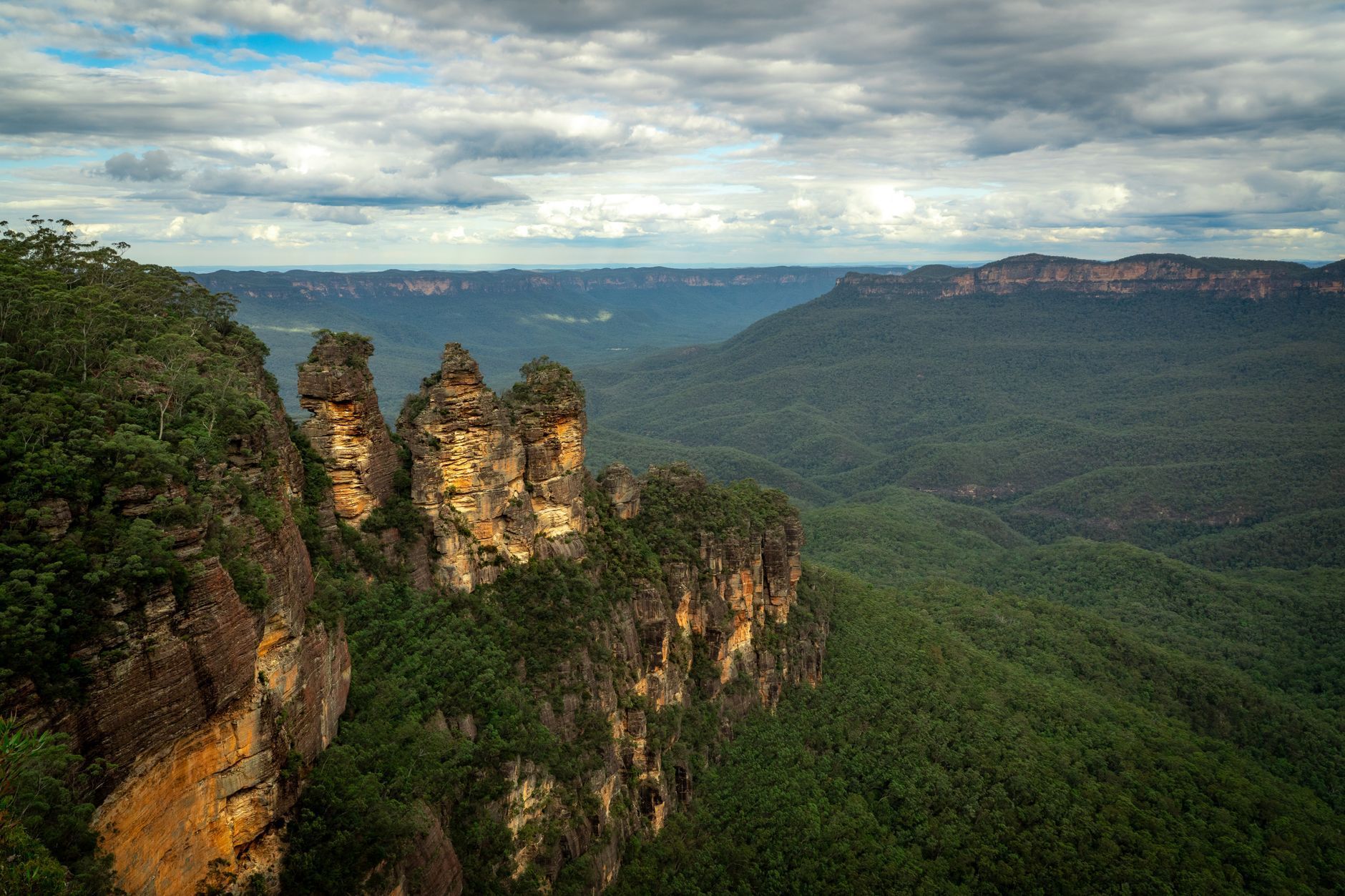
The Blue Mountains is the easiest big nature day out from Sydney, and one of the few you can do cheaply without a car. Sandstone cliffs, a eucalypt valley that genuinely looks blue in the haze, waterfall tracks and a string of lookouts all sit within a day's travel of the city. After a week of beaches and bars, it is a complete change of scenery without an overnight bag.
The real decision is not which lookout to see first. It is how you get there: catching the train and walking, booking an organised bus tour, or splitting a hire car. Each option shapes how many stops you get, how much walking you do and how rushed the day feels. This guide compares them, then covers the lookouts, the beginner-friendly walks and the conditions that catch people out.
How to choose your way of getting there
Start with budget. The train is almost always the cheapest way to reach the mountains, because it is ordinary public transport rather than a tourism product. A tour bundles transport, a driver-guide and a fixed route into one payment, which costs more but removes the planning. A hire car sits in between once you split fuel and hire between three or four people, though the sums only work if someone in your group can legally drive here.
Then ask how much you want to walk. If a long cliff-top walk is the point of the day, take the train: Katoomba and Leura stations sit close to the escarpment, so you can walk from one lookout to the next without a vehicle. If you would rather see several different places briefly, a tour covers more ground. Driving gives you both, letting you park at a trailhead, walk, then move on.
Group size and season matter too. Two people usually do better on the train; four can make a hire car cheaper per head. Winter compresses everything, because daylight is short and the last usable light arrives much earlier than it does in summer. Plan a shorter itinerary in the cooler months rather than squeezing the same list into fewer hours.
Train, tour or hire car compared
The train option: cheapest and surprisingly easy
Trains on the Blue Mountains line run from Sydney Central out through the western suburbs and up the escarpment towards Katoomba, stopping at the mountain villages along the way. It is a normal Sydney train, so you tap on and off with an Opal card or an accepted contactless card or device rather than buying a tourist ticket. Treat it as a long suburban journey rather than a quick hop, and treat any exact journey time you read online as approximate.
Check the timetable with Transport for NSW on the day you travel, not the week before. Services on this line are less frequent than inner-city routes, and weekend trackwork can turn part of the journey into a replacement bus. Missing one service can cost a large slice of daylight, so note the last realistic return before you start walking anywhere. Fares, daily caps and off-peak arrangements change, so look those up officially rather than trusting a number from a forum.
The reason the train works so well is geography: Katoomba's main street runs from the station down towards the escarpment, so the big lookouts are a walk away rather than a drive away. Leura, one stop earlier, is similar. A car-free day can therefore include real cliff-top walking, which is rare for a nature day trip from an Australian city.
Organised bus tours: more stops, less freedom
A day tour is the low-effort option. You are collected in the city, driven up, taken to the main viewpoints and returned in the evening, usually with a driver-guide filling in the geology and history. Tours typically fit in more separate stops than you would manage on foot, and some add extras such as a wildlife park on the way out or entry to a paid attraction. Inclusions vary between operators and seasons, so read the itinerary for the specific departure you are booking.
The trade-off is time. Stops are usually short and scheduled, which is fine for photographs and terrible for walking. If your idea of a good day is two hours on a cliff track, a coach tour will frustrate you. Tours also reach the busiest lookouts at the busiest times, because operators work to similar schedules. Some include a short guided walk — check the itinerary rather than hoping.
Hire car or campervan: freedom with a few catches
Driving gives you the most control. You can start early, reach trailheads that are awkward on public transport, string lookouts together in whatever order suits the weather, and leave when you are ready. Split between three or four travellers it can be reasonable value, though hire rates, insurance, excess conditions and minimum driver age vary between companies. For how car hire and campervans work for backpackers here, read the Australia backpacker transport guide before you book anything.
Two practical catches. First, parking at the best-known lookouts fills early, especially on weekends, school holidays and clear days after bad weather — arriving mid-morning often means circling or parking well back. Second, mountain driving is not city driving: roads climb, bend and narrow, fog can settle quickly, and if you have only recently started driving on the left, the combination is tiring. Swap drivers if you can, and avoid a tight return time.
What to actually do when you get there
Katoomba is the usual base, and Echo Point is the headline view: the Three Sisters rock formation on your left and the Jamison Valley opening out in front of you. It is busy, well signposted and genuinely worth seeing, but it is a viewing platform rather than an experience — use it as the start or end of a walk rather than the whole visit. Leura, one village along, is quieter, with cafés, shops and its own lookouts nearby.
Scenic World is the big paid attraction, with a cableway, skyway and a very steep railway between the clifftop and the valley floor. Whether it is worth it depends on your budget and how you feel about queues; ticket types and prices change, so check the current options directly. The budget alternative is simple: the lookouts and walking tracks are free, so you can spend the whole day on the cliffs without paying for entry.
Walks that fit into one day
The Prince Henry Cliff Walk is the most useful track for a car-free day. It runs along the escarpment between the Katoomba and Leura areas, linking a series of lookouts, so you can walk as much or as little as your time allows. It is a formed track with steps in places, and because it follows the clifftop, the views arrive constantly rather than only at the end.
Around Wentworth Falls, a cluster of tracks leads to waterfall views and down into the valley, from short lookout strolls to steep staircase descents that are much harder coming back up. The Grand Canyon Track, near Blackheath, is the classic loop for walking in the rainforest at the bottom of a gorge rather than looking at it from above; it is a longer, steeper day, better suited to travellers who already walk regularly.
Whichever track you choose, check the NSW National Parks and Wildlife Service alerts on the day. Tracks here close regularly for storm damage, rockfall, maintenance and hazard reduction burns, often only in part — one closed section can turn a loop into a there-and-back. Closures also happen at short notice, so a blog post from last year is not evidence that a track is open now.
Mountain walking is a different proposition from Sydney's coastal routes: colder, steeper, more exposed and with far less shade-to-shop convenience along the way. If you would rather stay closer to the city, or you want an easier second walking day either side of this trip, the best walks in Sydney covers the harbour and beach options that need no planning beyond a bus fare.
Conditions and safety: colder and wilder than Sydney
The most common mistake is dressing for the city. The mountains sit well above sea level and are consistently colder than Sydney, and cloud can settle on the escarpment and turn a famous view into grey nothing for hours. Wind on exposed clifftops makes it feel colder again, and rain is more likely than on the coast. Check the Bureau of Meteorology forecast for the mountains, not Sydney, and take a warm layer and rain jacket even on a promising morning.
The terrain deserves respect. Many lookouts sit at the top of high sandstone cliffs, and not every viewpoint or track edge is fenced. Stay behind barriers where they exist, keep back from unprotected edges, and do not climb onto rocks for a photograph — the drops are serious and wet rock is slippery. Stick to marked tracks, and turn around rather than pushing through damaged sections.
In the warmer months, bushfire risk changes the plan. On days of extreme fire danger or a total fire ban, walking in bushland is a poor idea and tracks can close entirely — check the NSW Rural Fire Service and NPWS before you set out. In winter, the constraint is daylight: darkness comes earlier than visitors expect, tracks are dangerous in the dark, and village food options thin out in the evening. Finish walking with light to spare.
How much time you actually need
Treat it as a full day, not a half day. Travel each way eats a serious portion of it, so a realistic car-free shape is: an early train out of the city, arrive mid-morning, walk down to the main lookout, spend two to three hours on a section of cliff track, eat in the village, then head back before the last convenient service. Leaving the city late is the fastest way to turn a good day into a rushed one.
One day is enough for one area done properly — usually the Katoomba and Leura clifftops. It is not enough to add Wentworth Falls, the Grand Canyon Track, Scenic World and a wildlife stop, however tempting the itinerary looks. If you want the valley floor, a longer waterfall walk or a sunrise, stay overnight in the mountains instead of compressing it into one day. Pick one main walk and one lookout area, and leave the rest for a return trip.
Fitting it into your Sydney stay
The Blue Mountains works best as one deliberate full day in a longer Sydney stay rather than something squeezed between other plans. Give it a day with decent weather, keep a spare day in case the forecast turns, and fill the rest of your time with city and coastal plans. For the rest of your itinerary, browse things to do in Sydney and slot the mountains in as your big nature day.