Skydiving in Australia: costs and locations
A tandem skydive is one of the biggest single splurges on a backpacking budget, so it is worth choosing the jump deliberately. This guide compares beach, reef, city and inland jump types, explains what changes with altitude and media packages, and sets out what to confirm with the operator before you pay.
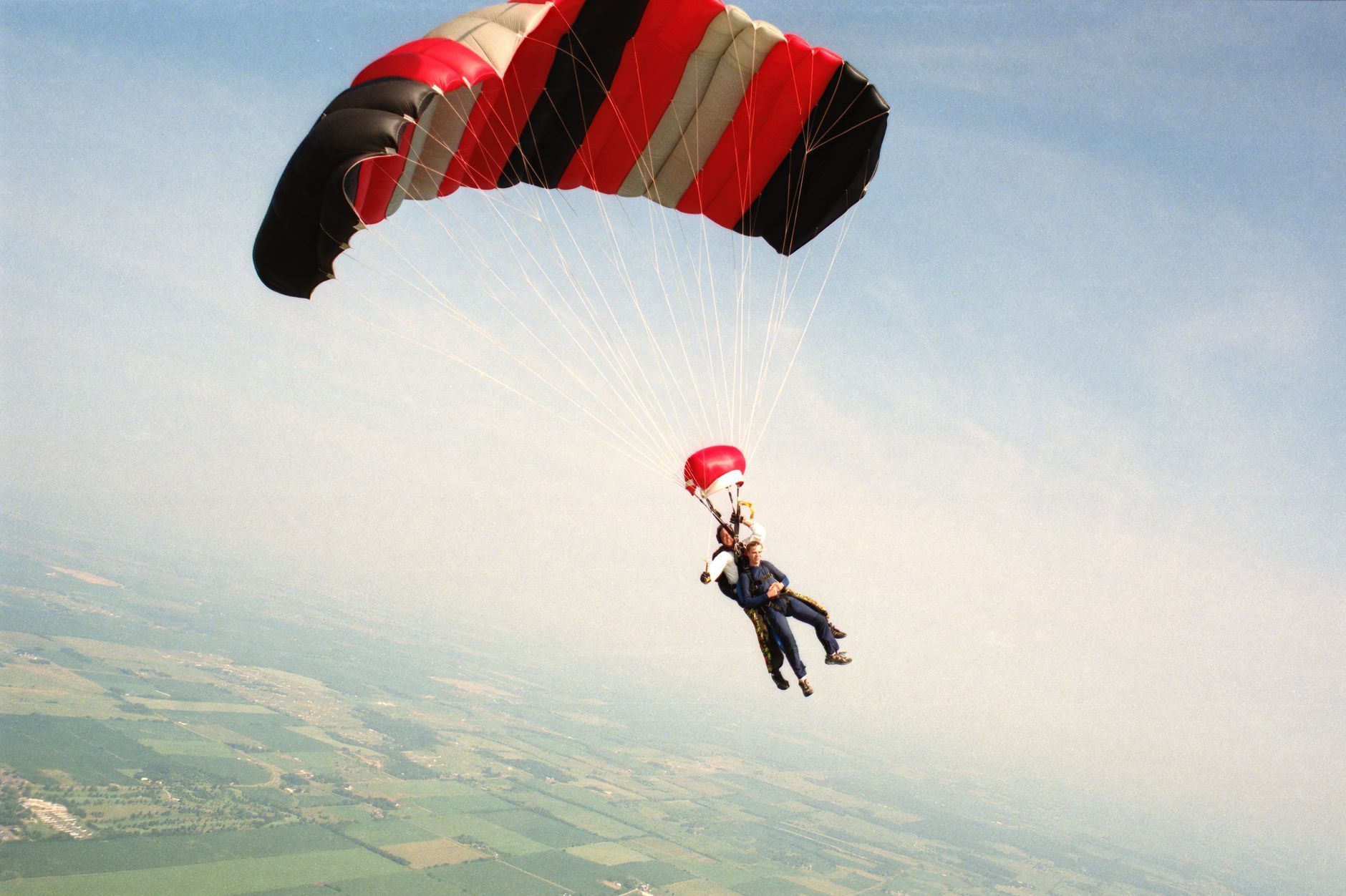
A tandem skydive is one of the few things almost every backpacker in Australia talks about doing and then hesitates over, usually because it costs more than a week of hostel beds. It is a genuine splurge, and it is worth treating it like one. The jump itself is over in minutes, but what you remember depends heavily on where you jump, what is underneath you when the door opens, and whether the day ran smoothly.
This guide is about making that choice well, not about naming the best place to skydive in Australia. There is no such place. The country has drop zones over beaches, reef, farmland, wine country and city coastline, and they are simply different experiences. What follows covers the kinds of jumps on offer, the variables that change the price and the day, and the questions worth asking before you hand over a deposit. Prices, altitudes and participant requirements vary between operators, so the specifics are left to whoever you book with.
Tandem jumps versus learning to jump on your own
Almost every backpacker who skydives in Australia does a tandem jump. You are harnessed to an instructor who handles the exit, the freefall and the canopy, and the preparation is a short briefing rather than a course. That is the appeal: no experience of any kind is required, and you can be back at your hostel the same afternoon.
The alternative is to start learning to jump solo. Accelerated freefall style courses are the usual entry route, where you jump with instructors alongside you and progress through stages until you can jump alone. It is a much larger commitment of time and money, and it only makes sense if you want to keep jumping rather than tick off one experience. Some drop zones also offer tandem jumps with a training element, so the jump counts as a first step. Course structures and prerequisites differ everywhere, so ask the operator directly.
Altitude, freefall and the extras that change the price
Most operators sell jumps at more than one altitude, and the higher option always costs more. The trade is straightforward: a higher exit means longer in freefall before the canopy opens, and that extra time is what you are paying for. The canopy ride afterwards is broadly similar either way. Which altitudes are available differs by drop zone and can change with the aircraft and conditions, so there is no national figure worth quoting. Ask what the operator runs and what the difference is in freefall time.
The cost that catches people out is the media package. Photos, handcam video, an outside camera flyer or some combination are usually sold separately, and the total can climb well above the advertised jump price. Decide before you arrive whether you want the footage, because the pitch at check-in is far more persuasive when you are already nervous and everyone else is saying yes.
Four kinds of jump, not a ranking
Rather than chasing a location other people rate highly, decide what you want underneath you when the door opens. Australian drop zones fall into a few broad categories, and each suits a different traveller and route. None is better than the others; they simply produce a different two minutes.
Beach-landing jumps
This is the jump most people picture: freefall over water and coastline, then a canopy ride down onto sand. In tropical north Queensland, Mission Beach has long been associated with this style, with the coast, offshore islands and rainforest-backed hills in view. It is a small town rather than somewhere most backpackers base themselves, so it usually means a night either side. Jumps also operate around Cairns and the tropical north, which is the simpler base if you are already there for reef and rainforest trips.
The northern New South Wales and southern Queensland coast is the other stretch associated with beach jumps. Byron Bay puts the lighthouse headland, the most easterly point of the mainland and a long arc of beach below you, while the Gold Coast trades that for a high-rise skyline against surf beaches — a very different photo from the same broad jump type. One caution applies everywhere: whether a jump actually lands on sand depends on conditions, aircraft and current arrangements at that location, and those change. Ask when you book, and again on the day.
Reef and island backdrops
The Whitsundays give you a different palette entirely. Jumping out of Airlie Beach puts island groups, fringing reef and shifting bands of blue and green underneath you, and the scale of it is genuinely hard to appreciate from a boat deck. If you are doing a sailing trip anyway, the two complement each other well.
That combination is also the practical warning. If you have a boat departure booked, do not put your jump on the morning of it, and do not put it on the day you get back either. Weather holds over water are common enough that a single day of margin is not really a margin at all.
City and coastline backdrops
If you are based in a capital and do not want to build a detour around a jump, city-adjacent drop zones are the pragmatic option. Around Sydney, jumping happens from areas outside the city itself, with coastline and beaches below and, depending on where you go up, a distant skyline. Wollongong, an hour or so further south, is another part of the coast associated with jumps, where the escarpment drops almost straight into the sea. Neither is in the city centre, so check whether transfers are included.
City-based jumps have one underrated advantage: they are the easiest to reschedule. If the weather turns, going back three days later costs you a train fare rather than two more nights in a town you had no other reason to visit. On a tight budget, that flexibility can matter more than the view.
Inland, mountain and wine-region jumps
Inland drop zones swap the ocean for patterned farmland, ranges, lakes and vineyards. The Yarra Valley, within reach of Melbourne, is a commonly cited example of this type, with vines and hills below and a long view across Victoria on a clear day. Wine and farmland drop zones operate in other states too, and they tend to be quieter than the headline coastal ones, which can help in peak season.
Inland jumping has its own quirks. It can be noticeably colder in the aircraft than the ground temperature suggests, especially in the southern states outside summer, and haze or smoke can affect visibility in some regions at certain times of year. Ask what conditions are typically like in the month you are travelling.
What a jump day actually looks like
Details vary between operators, but the shape of the day is fairly consistent. You check in — sometimes at an office in town, sometimes at the drop zone — and work through paperwork including a waiver and a health declaration. Expect that to take longer than you think, and expect to be asked to declare medical conditions honestly rather than optimistically.
Then comes a briefing covering body position, the exit, what happens under canopy and how to land, followed by a harness fitting and, depending on the drop zone, a jumpsuit and goggles. After that there is usually waiting, because jump slots move around with weather and the group ahead of you. The flight up is the longest part of the experience and where most people get nervous. The jump itself is over quickly. Allow at least half a day including transfers.
What to check before you book
Start with the operator. Sport parachuting in Australia is largely self-regulating through the Australian Parachute Federation, which sets the operating rules its members work under, within the broader aviation framework administered by the Civil Aviation Safety Authority. Check that the operator you are booking with is a current APF member, and confirm it through the APF rather than taking a badge on a website at face value. Memberships change.
Then ask about the operator's own participant requirements. Weight, height, age and medical criteria all exist, but they differ between drop zones because they depend on the equipment, the aircraft and the instructors available. There is no national limit to publish here, and anyone quoting you a single figure that applies everywhere is guessing. Ask the operator directly, and ask before you pay, because a requirement you do not meet is a far worse discovery at check-in than at booking.
That includes the medical side. If you have a recent injury, a back or neck problem, a heart, lung, ear or sinus condition, or you are pregnant, this is a conversation for your own doctor and the operator rather than for an article. Operators ask about medical history for a reason, and answering accurately protects you. Nervousness on its own is different and is not a reason to skip it — most first-time jumpers are frightened right up to the door.
Finally, the practical questions that save money and hassle. Is a transfer from town or your accommodation included, or charged separately? What do the photo and video options cost relative to the jump? What is the reschedule policy, and what happens to your deposit if you cancel? Getting those answers in an email or booking confirmation takes two minutes and settles any argument later.
Weather, insurance and leaving yourself a margin
Skydiving is weather-dependent in a way that catches out a lot of travellers. Wind at ground level and higher up, cloud base, rain and poor visibility can all stop jumping, and the call is made on the day — sometimes after you have arrived and waited a few hours. A Bureau of Meteorology forecast gives you a rough sense of whether a day looks workable, but the operator makes the decision.
The practical consequence is scheduling. Never book a skydive for the morning of a flight, bus or boat departure, and never make it the last thing you do in a town. Ask what happens if the day is scrubbed, because policies differ: some operators put you on standby for the next available slot, some hold your booking open, some apply refund rules only within a set window.
Insurance deserves its own check. Adventure activities are among the most common exclusions in travel insurance, and skydiving sits firmly in that category. Some policies exclude it outright, some cover it only with an adventure-sports add-on bought before you travel, and some treat a tandem jump differently from a training course. Smartraveller's general guidance on insurance is a reasonable starting point for why the wording matters.
There is no shortcut: nobody, including this guide, can tell you what your policy covers. Read the product disclosure statement, search it for skydiving or parachuting, and if the wording is ambiguous, ask your insurer in writing before you book. It is also worth deciding early how many big-ticket experiences you are doing, because a jump competes directly with a sailing trip or a chunk of your bus fare — the budget guide is a useful reality check, and the best time to visit guide helps you work out when the conditions on your route are more likely to cooperate.