Whitsundays sailing tours from Airlie Beach
A decision guide to Whitsundays sailing trips from Airlie Beach: day trip versus two or three days on board, how the boat styles differ, what living on a bunk is actually like, and the questions worth asking before you hand over a deposit.
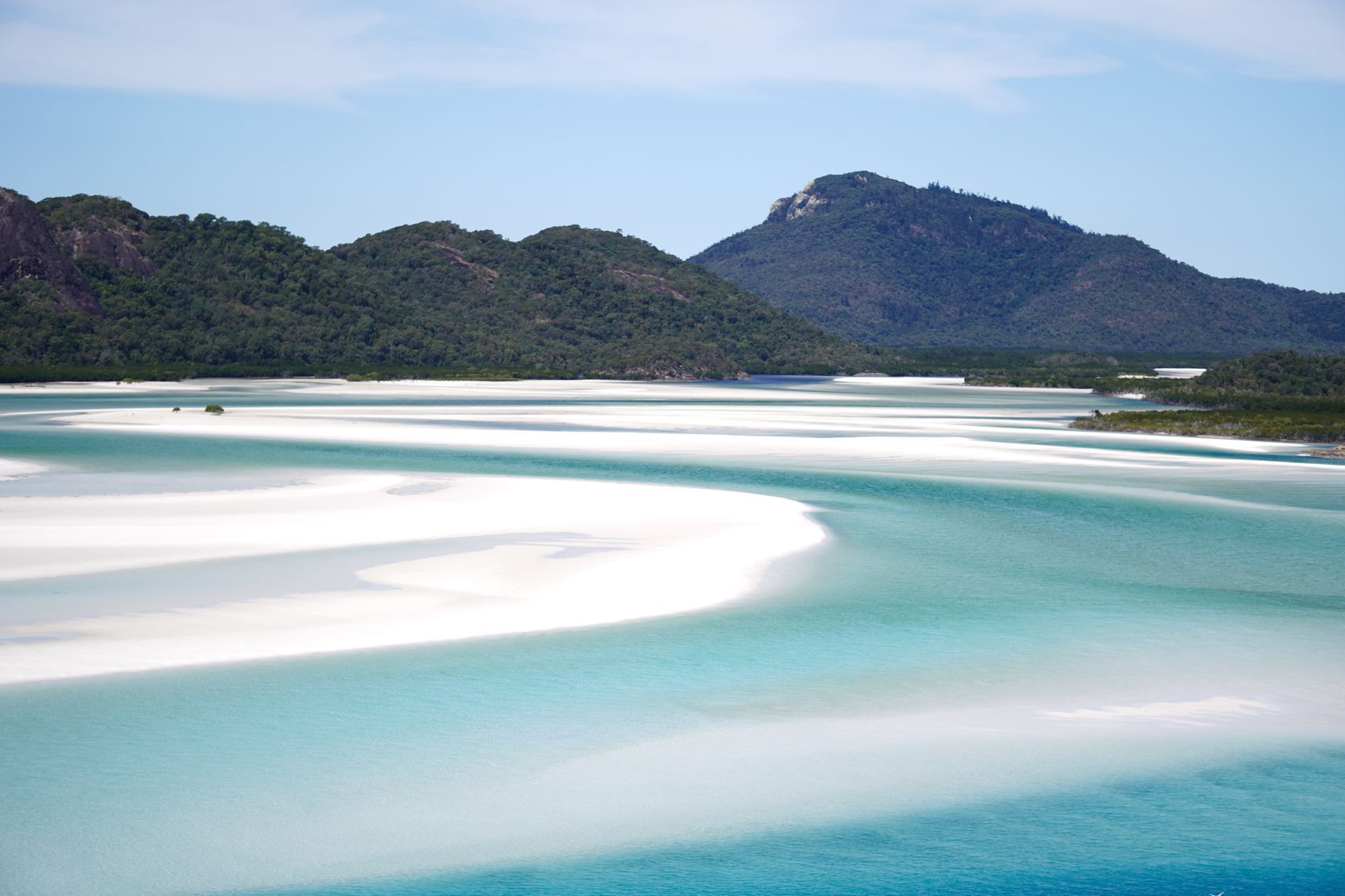
Almost every backpacker heading up or down the Queensland coast ends up in Airlie Beach with the same decision to make. The Whitsundays sit just offshore — 74 islands, fringing reef and the white silica sand of Whitehaven Beach — and the only sensible way to see them is on a boat. The question is which boat, and for how long. Do you take a single day trip and sleep in your hostel bed that night, or do you hand over two or three days to a sailing trip and live on board?
This guide compares the main trip types leaving Airlie Beach, explains what the different styles of boat are actually like, and covers the parts nobody mentions until you are already at sea: shared bunks, tiny bathrooms, stinger suits and seasickness. It deliberately does not list prices, departure times or boat names, because those change constantly and vary by operator. Treat it as a way to work out what you want before you walk into a booking office, then confirm the current details directly with whoever is selling you the trip.
How to choose between a day trip and an overnight trip
Start with the trade-offs rather than the brochures. Overnight sailing trips cost more than day trips, but you also stop paying for a hostel bed on the nights you are on the water, so the real gap is smaller than the headline difference suggests. Do that subtraction before you compare anything. If you are stretching a budget across the whole east coast, one well-chosen day trip may serve you better than three days you cannot really afford.
Then be honest about three things. First, seasickness — if you have struggled on ferries or small boats before, an overnight trip in open water is a long time to be uncomfortable with no way off. Second, how social you want it: some boats are effectively a floating hostel party, others are quiet and sailing-focused, and the difference is enormous when you cannot leave. Third, whether diving matters to you. If you want certified dives rather than snorkelling, that narrows your options considerably and is worth asking about before anything else.
Timing matters too. Weather and wind shape everything out there, and the season you visit affects water temperature, rainfall and marine stinger risk. If you are still building your route, the best time to visit Australia guide covers seasonal patterns, and the East Coast guide shows where Airlie Beach usually falls in a Cairns-to-Sydney run. Booking your trip for the middle of your stay rather than the last morning also leaves room to reschedule if the weather turns.
Whitsundays trip types compared
Boat styles and what they are like to be on
Ex-racing maxi yachts are the classic Whitsundays backpacker boat: long, narrow hulls built for speed, refitted with bunks. They sail fast and heel hard, which is thrilling if you enjoy that and miserable if you do not. Space below deck is tight, bunks sit close together and the atmosphere is usually loud and social. If you want to meet people and do not mind being physically close to them for three days, these boats deliver exactly that.
Tall ships and older classic sailing boats trade speed for atmosphere. They move more slowly, often carry more passengers, and give you the closest thing to an actual sailing experience — hauling on lines, helping raise sails and standing on deck while the boat works. They tend to feel steadier than a racing yacht but still roll in swell. The crowd varies from relaxed to lively, so ask what kind of trip that particular boat usually runs.
Catamarans sit on two hulls and stay noticeably flatter, which makes an enormous difference if you are prone to seasickness. Cabins are usually more comfortable, and there is more deck space to spread out on. They are generally the pricier option, and they can feel less like sailing and more like being on a stable platform that happens to have sails. For anyone nervous about spending two nights at sea, a catamaran is the safest first choice.
Powered vessels aimed at snorkelling and diving volume are a different proposition again. They reach sites quickly, carry more gear, and prioritise time in the water over time under sail. If your reason for going is the marine life rather than the sailing, these can be the better use of your money. Whatever style you choose, the crowd on board matters at least as much as the hull. Party-focused, relaxed and dive-focused trips all exist under every hull shape.
What you actually see out there
Whitehaven Beach is the headline: a long stretch of exceptionally fine white silica sand on Whitsunday Island, usually paired with a walk up to the Hill Inlet lookout where the tide swirls sand and water into the patterns you have seen in every photo. Most overnight trips aim to include it, but no operator can promise it on any given day. Wind direction, swell, tides and how many boats are already anchored all influence where a skipper can safely take you.
Snorkelling is usually at fringing reef around Hook Island, Border Island or similar sheltered bays rather than the outer Great Barrier Reef. Expect coral gardens, reef fish and good visibility on a calm day. Conditions vary: after heavy rain or strong wind, visibility can drop considerably. Turtles, rays and, in season, whales are all possible in Whitsunday waters, but nothing is guaranteed — anyone promising you a sighting is selling rather than describing.
This is also why you should treat any fixed hour-by-hour itinerary with suspicion. Skippers reshape the plan daily around wind, tide and weather, and a good one will move the entire route rather than push into an uncomfortable anchorage. If your main goal is the outer reef rather than islands and beaches, the Great Barrier Reef tours from Cairns guide covers a different way of reaching it.
Sleeping and living on board
Sleeping on a sailing boat is closer to camping than to a hostel dorm. Bunks are narrow, often stacked, and on some boats shared in a way that would surprise you if nobody warned you first. Ceilings are low, the boat moves all night, and there is nowhere to be alone. On a racing yacht your entire storage space may be the end of your bunk, which is why every operator asks you to bring a soft bag rather than a hard suitcase.
Bathrooms are tiny shared marine heads, and fresh water is limited, so showers are short, rationed or sometimes replaced by a rinse on the back deck. Phone reception drops out between islands, and charging points are few and often unreliable, so bring a charged power bank and accept that you will be offline in stretches. Many people end up enjoying that part.
You are also giving up your hostel bed for those nights. Hostels in Airlie Beach will usually store your main pack while you are away, but confirm that before you check out and do not assume storage is free or fully secure. If you want to think through how bookings, storage and check-out timing fit together across a longer trip, the backpacker accommodation guide covers the practical side of moving between stays.
Stingers, sun and seasickness
Marine stingers are a genuine consideration in tropical Queensland waters, and the higher-risk period runs through the warmer months, although the exact timing shifts from year to year and between locations. Boats generally provide stinger suits during that period and the crew will tell you when to wear one. Check current advice from Surf Life Saving Queensland and local signage rather than relying on dates you read months earlier, and follow crew instructions about when and where to enter the water.
Sun exposure on deck is more punishing than most people expect, because you get it from above and reflected off the water for hours at a time. A brimmed hat, sunglasses, a rash vest and regular reapplication do far more than a single morning application ever will. Use reef-safe sunscreen where you can, stay off coral entirely and take nothing from the water. These are Great Barrier Reef Marine Park waters and Whitsunday Islands National Park anchorages, and the rules exist for good reason.
If you are worried about seasickness, deal with it before you board rather than after. Speak to a pharmacist in Airlie Beach, start any preventative early rather than once you already feel unwell, and eat something before departure. On board, stay on deck in fresh air, look at the horizon and avoid reading below deck. Choosing a catamaran and a shorter trip will both stack the odds in your favour.
Booking practicalities
Ask exactly what is included before you pay. Meals, snorkelling gear, wetsuits or stinger suits, park and reef fees, marina transfers and linen are all handled differently from boat to boat, and a cheaper headline trip that excludes several of these may not be cheaper at all once you add them back. Get the inclusions written on your booking confirmation rather than relying on memory.
Weather cancellations happen, and there is no standard policy across operators. Some reschedule, some offer a credit and some refund part of what you paid, with different conditions attached. Ask specifically what happens if your trip is cancelled, shortened or rerouted because of weather, and how that would interact with an onward bus or flight. Leaving a spare day in your Airlie Beach stay is the simplest protection, since travel insurance will not usually help with a trip that is merely moved.
Book further ahead for school holidays and the winter peak, when the popular boats fill first; outside those windows there is more room to decide on the ground. Check the deposit and balance arrangements, whether you need to sign a medical or liability declaration in advance, and what identification to bring. If you have a medical condition, a dietary requirement or cannot swim confidently, say so at the time of booking rather than at the marina.
Before you book, and what to pack
If sailing is not for you
Not everyone should be on an overnight boat, and there is no shame in deciding that early. A day trip by fast boat can get you the sand and the lookout without a single night at sea. Day trips also operate to and from Hamilton Island if you happen to be flying in there.
Staying on land is a perfectly reasonable choice too. Airlie Beach has a free foreshore lagoon that is safe to swim in year-round, a marina worth wandering at sunset, walking tracks in the hills behind town and a pub scene most backpackers remember longer than they expect to. The things to do in Airlie Beach page lists what is running locally if you would rather keep your feet dry.